
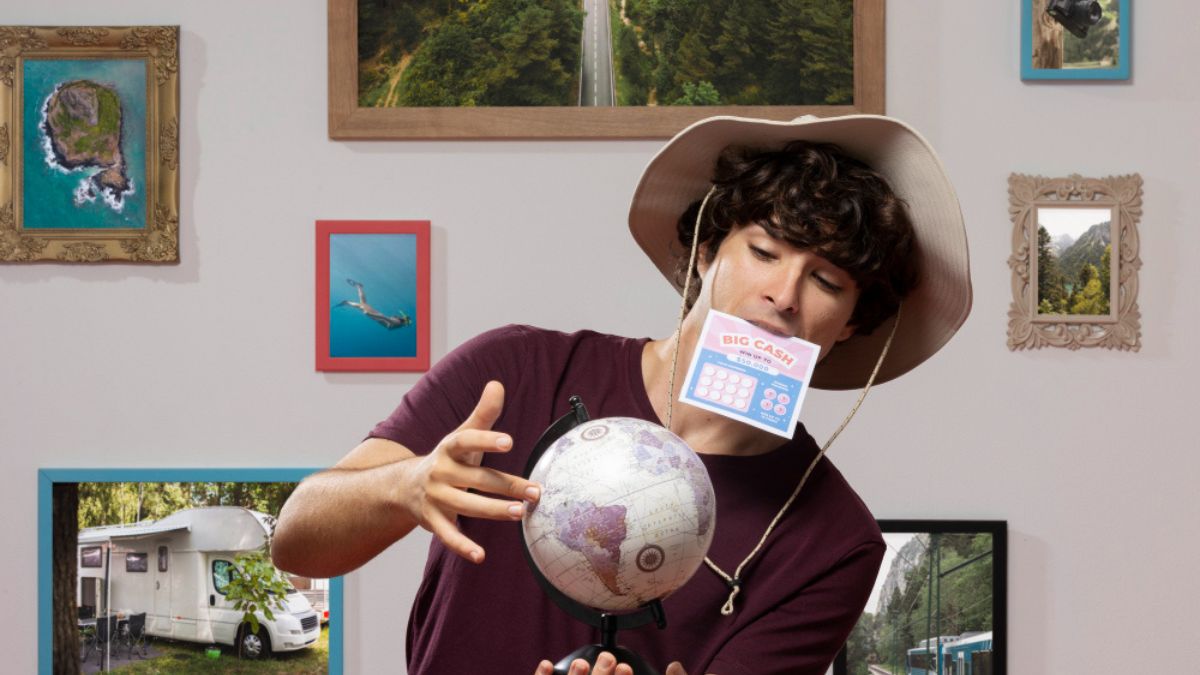
Littleminaxo, We live in the golden age of travel. A tap on a screen can summon a flight to anywhere, an apartment in a city we can’t pronounce, or a tour of a ruin we’ve only seen in textbooks. Information is abundant, access is democratized, and the entire world feels within reach. And yet, with this abundance comes a peculiar form of paralysis. The pressure to have the perfect trip, to see the must-see sights, to collect experiences like trophies, can be overwhelming. Travel, for many, has become another item on the performance checklist of modern life.
But what if there was another way? A path less algorithmically determined, more intuitively felt? This is where we find the travel ethos of “littleminaxo.”
If you were to stumble upon a travel blog or Instagram profile under this name, you wouldn’t find a list of “Top 10 Things to Do in Paris.” You wouldn’t see staged, wide-brimmed-hat shots on deserted beaches. Instead, you’d find something else entirely: a single, beautifully framed photo of a tarnished art nouveau doorknob in Budapest. A reflective essay on the particular scent of rain on hot stone in Marrakech. A meticulously researched guide to the third-best, but most authentic, pizza al taglio in a non-touristy Rome neighborhood.
“littleminaxo” is not a place. It is a sensibility, a travel philosophy for the curious, the detail-oriented, and the quietly passionate. It’s the pursuit of micro-experiences that, together, form a macro-understanding of a culture. It’s about trading the grand tour for the deeply personal pilgrimage.
This is a manifesto for traveling the littleminaxo way.
Part 1: Deconstructing the Alias – The Pillars of a Philosophy
The name itself, “littleminaxo,” offers clues to its core principles. It’s unconventional, memorable, and hints at a world of its own. Let’s break down the philosophy it represents.
1. The Cult of the “Little”: Depth Over Breadth
In a world obsessed with country counts and passport stamps, the littleminaxo traveler is a revolutionary. They believe that true discovery lies not in how many places you see, but in how deeply you see one place. This means spending a week in a single Parisian arrondissement and knowing its boulangerie, its fromagerie, and its grumpy-but-lovable tabac owner by name. It’s about understanding the micro-climate of a single Venetian canal, how the light hits it at 4 PM versus how it looks under the mist of a 9 AM morning.
This principle rejects FOMO (Fear Of Missing Out). The littleminaxo traveler is content to “miss” the Mona Lisa in favor of spending two hours in the Musée de la Chasse et de la Nature, a quirky museum dedicated to hunting and nature that offers a far more unique and personal story. They find majesty in the miniature: the intricate pattern on a Portuguese azulejo tile, the specific foam on a perfectly pulled pint of Guinness, the worn cover of a second-hand book in a Buenos Aires librería.
2. The “Minaxo” Aesthetic: Curated, Not Cluttered
The “minaxo” suffix suggests something curated, collected, and slightly mystical. This translates to an aesthetic that is highly personal and intentional. A littleminaxo travel feed isn’t a chaotic dump of every photo taken; it’s a carefully edited gallery where each image tells a story, evokes a feeling, or highlights a beautiful, often overlooked, detail.
This aesthetic values texture, light, and composition. It’s about finding the perfect symmetry in a Kyoto temple garden, or the beautiful decay on a peeling painted wall in Havana. It’s a style that is often quiet, almost melancholic, but always deeply evocative. The goal is not to show that you were there, but to convey how it felt to be there. It’s travel as a form of personal poetry.
3. The Seeker, Not The Tourist: The Primacy of Authenticity
The littleminaxo traveler is, above all, a seeker. They are not a passive consumer of pre-packaged experiences. They are an active participant in the discovery of a place. Their authenticity isn’t found in a “local” restaurant recommended by a travel influencer, but in the unassuming place down a side-alley where the menu is only in the native language and the decor hasn’t changed since the 1970s.
This seeker mentality requires work. It involves pre-trip research that goes beyond top-10 lists, diving into history books, novels, and films set in the location. It means having the confidence to get purposefully lost. It’s about engaging all five senses: listening for the distinctive sounds of a city, touching the ancient stones of a wall, tasting unfamiliar ingredients, smelling the unique blend of a local market, and watching the daily rhythms of life unfold.
Part 2: The littleminaxo Travel Method: A Practical Guide
Adopting this philosophy requires a shift in mindset and method. Here is a practical guide to planning and executing a trip the littleminaxo way.
Phase 1: The Pre-Trip – Research as a Form of Anticipation
-
Forgo the Guidebooks (as a Primary Source): Start instead with context. Read a historical novel set in your destination. Watch a classic film from that country. Listen to its traditional and contemporary music. This builds an emotional and cultural foundation that a list of facts cannot.
-
Create a “Mood Board,” Not an Itinerary: Use Pinterest or a simple notebook to collect images, quotes, and ideas that resonate with the feeling you want from the trip. Are you seeking the melancholic romance of Lisbon’s fado? The serene minimalism of a Japanese onsen town? Let this board guide your choices, not a rigid hour-by-hour schedule.
-
Identify Your “Anchor Points”: Instead of a list of 20 sights, choose 2-3 “anchor points” for your entire trip. This could be a specific small museum, a cooking class with a local nonna, a long-distance walk through a particular landscape, or even a quest to find the best craft coffee in the city. Everything else becomes a spontaneous adventure that orbits these fixed points.
-
Embrace Digital Deep Dives: Use tools like Google Maps to “walk” the streets of your destination virtually beforehand. Look for interesting side streets, intriguing shop fronts, and green spaces away from the main hubs. Save these as pins on a custom map. This pre-scouting makes getting lost later feel more like a guided discovery.
Phase 2: On the Ground – The Art of Noticing
-
Walk. And Then Walk Some More: The littleminaxo traveler’s primary mode of transport is their own two feet. You cannot notice the hidden details from a tour bus or the underground. The pace of walking allows for serendipity—the sudden discovery of a tiny art gallery, a charming courtyard, a street musician who stops you in your tracks.
-
Practice “Slow Looking”: When you do visit a museum or a site, don’t try to see everything. Choose one or two rooms, or even a single piece of art, and spend 30 minutes with it. Sketch it in a notebook. Write down what it makes you feel. What are the details the postcard doesn’t show? This deep engagement is infinitely more valuable than a frantic gallery dash.
-
Become a Collector of Moments, Not Things: While a littleminaxo traveler might bring back a small, meaningful souvenir (a specific type of Italian pasta from a local shop, a ceramic fragment from a riverbank), their true collection is sensory and mental. They collect the memory of the taste of a sun-warmed peach from a French market. The sound of church bells echoing across a Tuscan valley at dusk. The feeling of cold marble under their bare feet in an ancient bathhouse.
-
Talk to People (But Respectfully): The littleminaxo way isn’t about forcing interactions, but being open to them. A simple question to a shopkeeper about their product, a compliment to a baker on their bread, a shared smile with an old man on a park bench—these micro-connections can become the most cherished memories of a trip. It’s about human-scale engagement.
Phase 3: The Return – Integration and Curation
-
Process, Don’t Just Post: The impulse is to dump 500 photos on social media the day you return. Resist it. The littleminaxo traveler takes time to process their experience. They journal, they reflect, they let the memories settle. The curation of their story—whether through a blog, a photo book, or a simple conversation—is as important as the trip itself.
-
Find the Threads: What was the theme of your journey? Was it about water, following canals, fountains, and coastlines? Was it about color, tracking the specific blues of Morocco or the greens of Ireland? Identifying these threads helps weave your disparate experiences into a cohesive narrative, a story that is uniquely yours.
-
Bring it Home: The ultimate goal of a littleminaxo journey is integration. It’s about letting the experience change you and your daily life. Maybe you start brewing your coffee the way you learned in Turkey. Maybe you incorporate the Danish concept of hygge into your home. The trip doesn’t end when you land; it becomes a part of your personal tapestry.
Part 3: A littleminaxo Itinerary: A Week in Kyoto, The Minaxo Way
To make this philosophy concrete, let’s imagine a littleminaxo week in Kyoto, a city often overrun with checklist tourism.
Day 1: Arrival & The Philosophy of the Alleyway
-
Check-in: Not to a large hotel, but to a family-run ryokan (traditional inn) in a quiet neighborhood like Murin-an or near Demachiyanagi.
-
Anchor Point: No major sights. The goal is to decompress and attune your senses. The evening is spent walking the pontocho (alleyways) not for the restaurants, but to observe the play of light and shadow, the textures of the wooden lattices, and the faint sounds of conversation and clinking dishes from behind noren curtains.
Day 2: The Texture of Tranquility
-
Morning: Skip the crowded Fushimi Inari. Instead, visit Shoren-in Temple, known as the “Awadachi Temple.” Its garden is sublime, and it’s often quiet. Sit on the veranda and just watch the moss, the stones, the carefully raked gravel. This is “slow looking” applied to a landscape.
-
Afternoon: Wander the Philosopher’s Path, but not as a thoroughfare. Stop at every small shrine and temple you pass along the way, like Honen-in, with its beautiful sand designs. Notice the small details: the moss on a Jizo statue, the way the cherry tree branches (even without blossoms) frame a view.
-
Evening: Eat at a tiny, specialized restaurant. Perhaps a soba shop that only serves buckwheat noodles, or an okonomiyaki counter with six seats. The experience is about the mastery of one thing.
Day 3: The Craft of Things
-
Morning: Participate in a craft workshop. Not a generic tourist one, but perhaps a bookbinding class using traditional Japanese papers, or a indigo dyeing session. The goal is to understand Kyoto through the creation of a beautiful object, engaging your hands as well as your eyes.
-
Afternoon: Explore the Nishijin Textile Center and the surrounding area, home to Kyoto’s weavers. Look for small galleries and shops selling furoshiki (wrapping cloths) and other textiles. Collect the story of the craft, not just a souvenir.
Day 4: The Scent of Wood and Incense
-
Full Day: A trip to Kurama and Kibune, two villages in the northern mountains. Walk the forest path from Kurama-dera temple to Kibune. This day is about the sensory experience of the forest: the scent of cedar and cypress, the sound of the river, the cool mountain air. Have a kawadoko lunch (dining on a platform over the river) in Kibune if in season. This is a pilgrimage defined by nature, not just religion.
Day 5: The Modern Whisper
-
Morning: Visit a contemporary art space. The Kyoto City KYOCERA Museum of Art or a smaller gallery like Tempo-kan. See how modern artists dialogue with Kyoto’s ancient aesthetic. This provides a vital counterpoint and prevents “temple fatigue.”
-
Afternoon: Explore the Gion district in the late afternoon, not for geisha-spotting, but to appreciate the architecture. Notice the kicho (hanging bamboo blinds) and the exquisite wooden facades. The goal is to appreciate the district as a living piece of design, not a photo opportunity.
Day 6: The Culinary Deep Dive
-
Activity: Go to Nishiki Market early, not just to sample food, but with a purpose. Perhaps your “anchor” for the day is to assemble a perfect picnic. Talk to the vendors. Ask about a particular type of pickled vegetable or a strange-looking seafood. This turns a market visit from a spectacle into a mission of discovery.
Day 7: Integration and Departure
-
Morning: Return to a place that resonated with you—perhaps the quiet garden at Shoren-in or a specific coffee shop you discovered. Sit and journal. Reflect on the threads of your journey: Was it the interplay of nature and architecture? The reverence for craft? The quiet dignity of the alleys?
-
Departure: You leave not with a checklist completed, but with a sensory palette filled: the memory of the feel of tatami, the taste of matchi, the sound of the temple bell, the scent of incense and wood. You have not “done” Kyoto; you have, in a small way, felt it.
Conclusion: The Quiet Revolution of littleminaxo
The littleminaxo philosophy is a quiet rebellion against the commodification of travel. It is a call to move more slowly, to look more closely, and to feel more deeply. It is an acknowledgment that the most profound journeys are often not about the miles covered, but the millimeters of depth achieved.
In a world shouting for our attention with “must-see” lists and Instagrammable hotspots, littleminaxo is a whisper, inviting us to listen to the softer, more subtle stories a place has to tell. It is travel not as a performance for others, but as a conversation with the world and with oneself.
So, the next time you plan a trip, forget the country count. Embrace the alias. Become a seeker of the little things. Curate your own minaxo collection of moments, textures, and tastes. You may just find that the smallest details lead to the biggest, most lasting transformations. Your passport, and your soul, will thank you for it.